Introduction
Starting a new business is exciting, but one of the biggest challenges startups face is getting their first customers. Even the best product or service can struggle if people don’t know it exists.
This is where digital marketing becomes essential. Unlike traditional marketing, digital strategies allow startups to reach their target audience faster, measure performance in real time, and scale campaigns efficiently.
With the right strategy, startups can compete with larger companies even with smaller budgets.
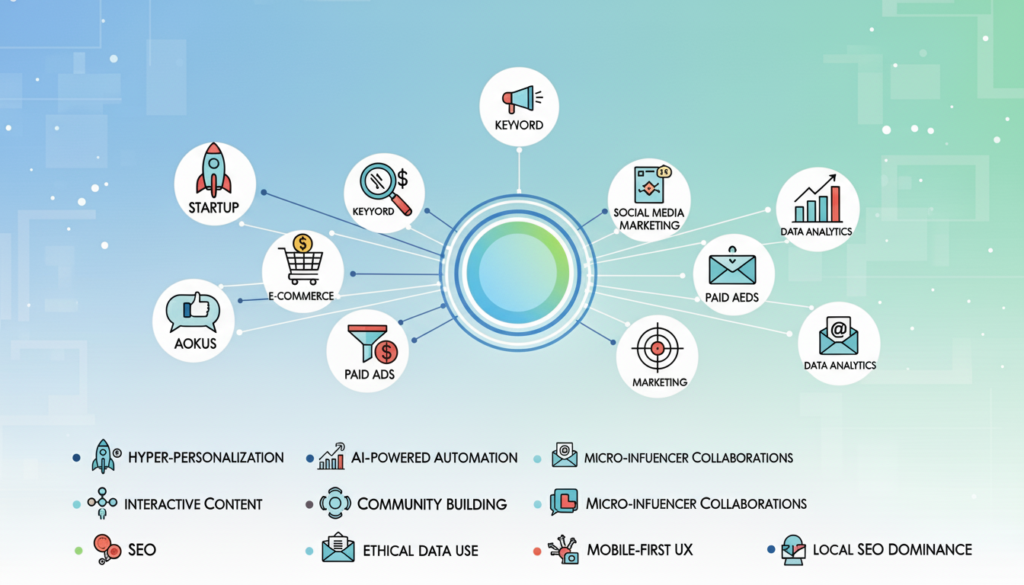
In this guide, we’ll explore the most effective digital marketing strategies for startups, including SEO, social media marketing, content marketing, and automation tools.
Why Digital Marketing Is Critical for Startups
Startups operate in a competitive environment where visibility and brand awareness are key to survival.
Traditional marketing methods like billboards and print ads often require large budgets and offer limited tracking capabilities. Digital marketing, on the other hand, allows startups to reach highly targeted audiences with measurable results.
The key benefits include:
- Cost-effective marketing campaigns
- Real-time performance analytics
- Ability to target specific audiences
- Scalable marketing strategies
- Faster customer acquisition
Startups that invest early in digital marketing often see faster growth and stronger brand recognition.
Strategy 1: Build a High-Performance Website
Your website is the foundation of your digital marketing strategy. It acts as your online storefront, brand identity, and lead generation system.
A well-designed website should focus on:
- fast loading speed
- clear messaging
- strong calls-to-action
- mobile responsiveness
- SEO optimization
Many startups today use modern platforms like Webflow, WordPress, Shopify, and Framer to build scalable websites.
Professional development ensures your website is not only visually appealing but also optimized for conversions and performance.
Strategy 2: Search Engine Optimization (SEO)
SEO is one of the most powerful marketing strategies for startups because it brings long-term organic traffic.
Instead of paying for ads, SEO allows your website to rank on search engines when people search for relevant topics or services.
Key SEO strategies include:
Keyword Research
Identify the search terms your potential customers use.
On-Page Optimization
Optimize titles, meta descriptions, headings, and images.
Content Creation
Publish valuable blog content that answers user questions.
Technical SEO
Improve site speed, mobile performance, and indexing.
Backlink Building
Earn links from reputable websites to increase authority.
Over time, SEO can become one of the most reliable traffic sources for startups.
Strategy 3: Content Marketing
Content marketing focuses on creating valuable content that educates and attracts your target audience.
Instead of directly selling products or services, content marketing builds trust and positions your brand as an authority.
Examples of content include:
- blog posts
- educational guides
- tutorials
- case studies
- industry insights
A well-maintained blog can dramatically improve your website’s SEO while also helping potential customers understand your expertise.
For example, startups in technology or design industries often publish blogs about trends, tools, and best practices to attract organic traffic.
Strategy 4: Social Media Marketing
Social media platforms provide startups with direct access to their target audience.
Platforms such as:
- TikTok
allow startups to build brand awareness and engage with customers in real time.
Successful social media marketing involves:
- posting valuable and engaging content
- interacting with followers
- sharing industry insights
- showcasing products and services
- running targeted ad campaigns
Startups should focus on platforms where their audience is most active rather than trying to dominate every platform.
Strategy 5: Email Marketing
Email marketing remains one of the most effective digital marketing channels for startups.
Unlike social media platforms where algorithms control visibility, email marketing allows businesses to communicate directly with their audience.
Benefits include:
- high return on investment
- direct communication with customers
- personalized marketing campaigns
- automated nurturing sequences
Startups can build email lists by offering valuable resources such as:
- free guides
- downloadable templates
- exclusive insights
- discount offers
Over time, email marketing becomes a powerful channel for customer retention and repeat business.
Strategy 6: Paid Advertising
While organic strategies like SEO take time to produce results, paid advertising can generate traffic and leads quickly.
Popular advertising platforms include:
- Google Ads
- Facebook Ads
- Instagram Ads
- LinkedIn Ads
Paid advertising allows startups to target audiences based on demographics, interests, behaviors, and search intent.
To maximize performance, startups should focus on:
- clear landing pages
- compelling ad copy
- targeted audience segments
- continuous campaign optimization
Paid ads work best when combined with strong landing pages designed specifically for conversions.
Strategy 7: Conversion Optimization
Driving traffic to your website is only part of the marketing process. The real goal is to convert visitors into customers.
Conversion optimization focuses on improving how users interact with your website.
Key strategies include:
- improving landing page design
- simplifying user journeys
- optimizing call-to-action buttons
- reducing form friction
- using social proof such as testimonials
Even small improvements in conversion rates can significantly increase revenue for startups.
Strategy 8: Marketing Automation and AI
Automation tools are transforming digital marketing by helping startups manage campaigns more efficiently.
Modern tools allow businesses to automate:
- email campaigns
- customer follow-ups
- lead nurturing sequences
- social media scheduling
- customer support chatbots
AI-powered solutions can also analyze user behavior and recommend optimized marketing strategies.
This allows startups to scale their marketing efforts without dramatically increasing operational costs.
Common Digital Marketing Mistakes Startups Should Avoid
While digital marketing offers huge opportunities, many startups make mistakes that slow their growth.
Common mistakes include:
- trying too many marketing channels at once
- ignoring SEO and long-term strategies
- focusing only on paid ads
- neglecting website performance
- inconsistent content creation
Startups should focus on building a clear marketing strategy with measurable goals rather than chasing every new trend.
The Importance of Consistency
One of the most important factors in digital marketing success is consistency.
Successful startups consistently:
- publish valuable content
- engage with their audience
- analyze marketing data
- optimize campaigns
- improve customer experience
Marketing is not a one-time effort but an ongoing process that evolves as your business grows.
Conclusion
Digital marketing has become one of the most powerful growth engines for startups.
By combining strategies such as SEO, content marketing, social media engagement, and marketing automation, startups can build strong online visibility and attract high-quality customers.
The most successful startups focus on creating value for their audience while continuously optimizing their marketing strategies.
With the right approach, digital marketing can transform a small startup into a scalable and recognizable brand.