Key Takeaways
Artificial Intelligence is transforming how businesses operate. From customer support to marketing automation, AI is helping companies reduce manual work, improve efficiency, and scale faster than ever before.
Here are the most important things to know about AI automation for businesses:
- AI automation reduces repetitive manual tasks across departments
- Businesses can improve efficiency and reduce operational costs
- AI-powered systems improve decision making using real-time data
- Marketing, sales, and customer support benefit the most from automation
- Automation tools help businesses scale without hiring large teams
Companies working with digital agencies like Webhorus are increasingly integrating AI tools to streamline operations and create smarter digital ecosystems.
What Is AI Automation?
AI automation refers to the use of artificial intelligence technologies to automate processes that normally require human effort.
Unlike traditional automation, which simply follows predefined rules, AI automation can analyze data, learn patterns, and improve decisions over time.
This allows businesses to automate more complex workflows such as:
- customer communication
- marketing campaigns
- sales pipelines
- data analysis
- content generation
For modern companies, AI automation is quickly becoming a core component of digital strategy.
Why AI Automation Is Becoming Essential for Businesses
Businesses today face increasing pressure to operate faster while maintaining high-quality customer experiences.
Manual processes slow down operations and often lead to errors, delays, and inefficiencies.
AI automation solves these challenges by enabling systems to perform tasks automatically with minimal human input.
Key benefits include:
Increased Productivity
AI tools can perform tasks continuously without breaks, allowing businesses to operate more efficiently.
For example, automated systems can respond to customer inquiries instantly, process leads, and manage marketing campaigns without human intervention.
Cost Reduction
Hiring large teams to manage repetitive tasks can be expensive.
AI automation reduces operational costs by replacing manual processes with intelligent workflows.
Businesses can redirect resources toward strategy, innovation, and growth instead of routine administrative work.
Better Decision Making
AI systems analyze large volumes of data much faster than humans.
This allows businesses to gain deeper insights into customer behavior, marketing performance, and operational efficiency.
With accurate data insights, companies can make smarter decisions that drive long-term growth.
Common AI Automation Use Cases
AI automation can be applied across multiple areas of business operations.
Here are some of the most impactful applications.
Customer Support Automation
Customer support teams often spend significant time answering repetitive questions.
AI chatbots and automated support systems can handle these inquiries instantly.
Examples include:
- answering frequently asked questions
- providing product information
- assisting with order tracking
- scheduling appointments
These systems operate 24/7, improving response times and customer satisfaction.
Marketing Automation
Marketing teams rely heavily on automation to manage campaigns and analyze performance.
AI-powered marketing tools can automatically:
- segment audiences
- personalize content
- optimize email campaigns
- analyze customer behavior
- generate marketing insights
Automation platforms allow businesses to run complex campaigns without manually managing each step.
Sales Pipeline Automation
Sales teams often spend hours managing leads and updating CRM systems.
AI automation tools streamline these processes by automatically:
- capturing leads from websites
- scoring prospects based on behavior
- assigning leads to sales teams
- scheduling follow-ups
- sending personalized messages
These systems help sales teams focus on closing deals rather than managing administrative tasks.
Content Creation and Management
Content marketing plays a major role in digital growth.
AI tools can assist businesses with:
- generating blog ideas
- drafting marketing copy
- summarizing data insights
- optimizing content for SEO
This helps companies maintain consistent content production without overloading their teams.
Workflow Automation
AI automation can also streamline internal workflows across departments.
Businesses can automate tasks such as:
- document processing
- invoice management
- appointment scheduling
- data entry
- reporting and analytics
These workflows eliminate repetitive manual tasks and reduce operational bottlenecks.
AI Automation Tools Businesses Use
Many platforms now provide advanced automation capabilities.
Popular tools include:
- CRM automation platforms
- marketing automation systems
- chatbot frameworks
- workflow automation software
- AI analytics platforms
Businesses often combine multiple tools to create a complete automation ecosystem.
AI Agents and Intelligent Systems
One of the most exciting developments in AI automation is the rise of AI agents.
AI agents are intelligent systems capable of performing tasks independently.
Examples include:
- automated customer service assistants
- AI scheduling agents
- AI research assistants
- AI marketing optimization systems
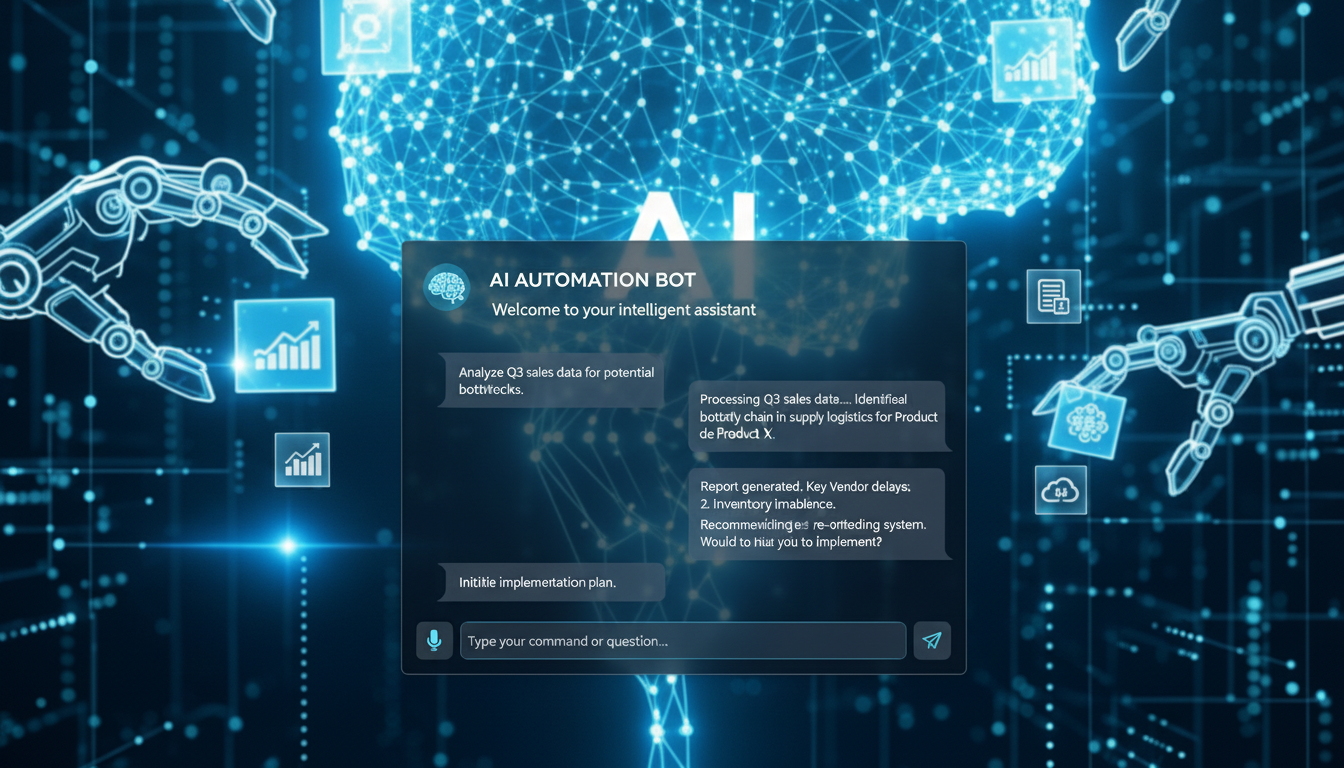
(example AI assistant dashboard image)
These agents can perform complex tasks that previously required human teams.
This is why services like AI Agent Development are becoming increasingly popular among businesses looking to modernize operations.
Integrating AI Automation with Websites
Websites serve as the central hub for most business automation systems.
Modern websites can integrate AI tools to:
- capture and qualify leads
- automate customer communication
- personalize user experiences
- analyze visitor behavior
For example, businesses using platforms like Webflow can integrate automation tools with CRM systems and marketing platforms.
This creates a seamless digital workflow from website visit to customer conversion.
Challenges of AI Automation
Despite its benefits, AI automation also presents certain challenges.
Businesses must consider:
Implementation Complexity
Setting up automation systems requires careful planning and technical expertise.
Poorly configured automation can create inefficient workflows.
Data Privacy and Security
Automation systems often handle sensitive customer data.
Companies must ensure they follow proper security practices and comply with privacy regulations.
Human Oversight
AI systems should support human teams rather than completely replace them.
Businesses still require human expertise for strategic decision-making and customer relationships.
The Future of AI Automation
AI automation is still evolving rapidly.
In the coming years, businesses will see:
- more intelligent AI assistants
- predictive automation systems
- deeper integration with digital platforms
- fully automated marketing and sales funnels
Companies that adopt automation early will gain significant competitive advantages in efficiency and scalability.
How Businesses Can Start Using AI Automation
If your company is new to AI automation, start with small improvements.
For example:
- Implement a chatbot for customer support
- Automate email marketing campaigns
- Integrate CRM systems with website forms
- Use analytics tools to track customer behavior
- Introduce AI tools for content and marketing optimization
Gradually expanding automation across departments allows businesses to scale efficiently.
Conclusion
AI automation is transforming the way businesses operate.
By automating repetitive tasks, analyzing data faster, and improving decision-making, AI systems allow companies to scale operations while reducing costs.
Businesses that invest in AI-powered workflows will gain a strong competitive advantage in the digital economy.
With the right strategy and implementation, AI automation can become one of the most powerful growth tools for modern organizations.
Companies looking to integrate automation into their digital ecosystem often work with specialized development teams like Webhorus to design scalable AI-powered solutions.